
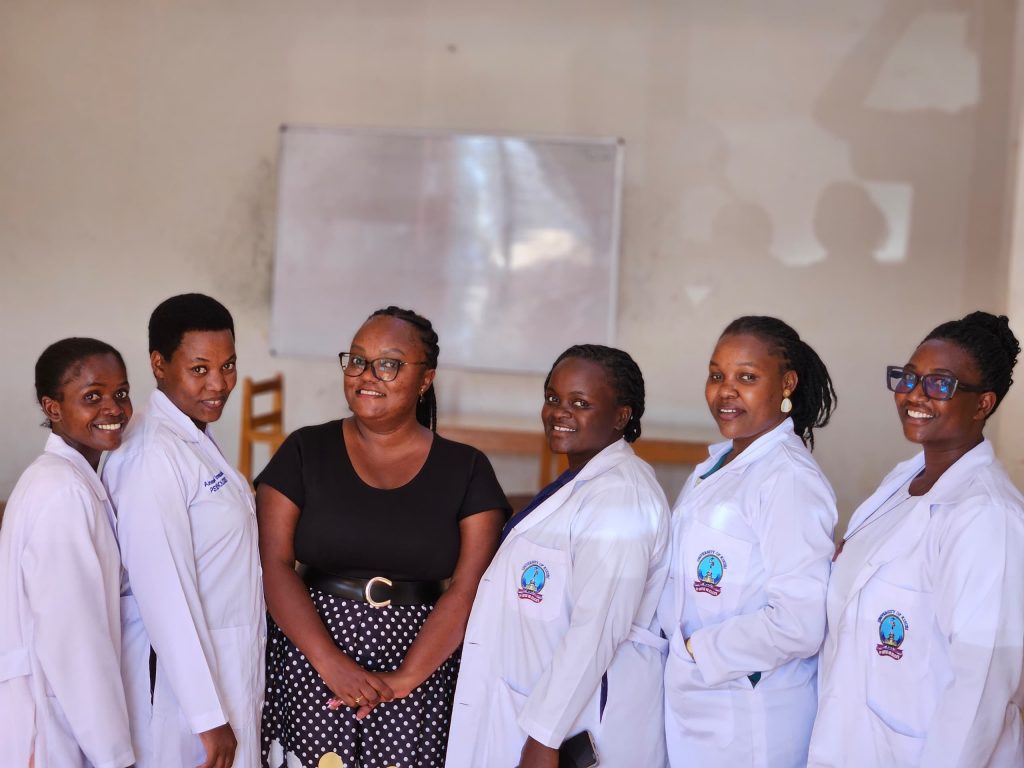
The 4th Uganda Counselling Association (UCA) Students Symposium, held on 16 April 2026 at the University of Kisubi, brought together a vibrant community of future counselling professionals in a powerful demonstration of how academic training can be meaningfully connected to real-world practice. Running from 8:00 am to 5:00 pm, the full-day event was hosted in partnership with the University of Kisubi and convened 210 counselling students drawn from eleven universities across Uganda under the unifying theme “Bridging Theory and Practice.”
From the moment participants arrived on campus, there was a strong sense of shared purpose. Students from diverse academic institutions came together not as competitors, but as emerging professionals seeking to deepen their understanding of counselling practice and its relevance in addressing real human challenges. The symposium was not only a learning experience but also a professional immersion, designed to challenge participants to think beyond textbooks and consider how counselling theories translate into everyday client interactions, community interventions, and workplace realities. The presence of media coverage from NTV further amplified the significance of the gathering, situating it within national conversations on mental health and professional training.
Throughout the day, participants engaged in rich dialogue and knowledge exchange guided by experienced professionals and academics. The Guest of Honour, Fr Dr Kiruma Nicholas, Education Secretary of the Kampala Archdiocese, set a reflective tone by emphasizing the importance of ethical grounding and values in professional counselling practice. His message underscored that technical competence alone is not sufficient without a strong moral and human-centred foundation. The keynote address by Mr Kizito Wamala, a Clinical Psychologist and Psychotherapist, further challenged students to embrace evidence-based practice while remaining deeply attentive to the lived realities of clients, especially in contexts where mental health needs are complex and evolving.
Other presenters enriched the experience with perspectives drawn from leadership, clinical psychology, public health, and entrepreneurship. Mr David George Kabiswa highlighted the importance of leadership and personal development in shaping effective practitioners. Ms Vivian Olgah Kudda, General Secretary of the Uganda Counselling Association, brought attention to the professional structures that support counsellors and the importance of student engagement within the association. Mr Kavuma David connected counselling psychology to public health systems and research, while Mr Kawekwa Douglas, himself a counselling psychology student and founder of MindLyfe Limited, inspired participants by demonstrating how innovation and entrepreneurship can emerge even during training.
These contributions were anchored around key sub-themes that ran through the discussions of the day, including the practical application of course concepts, the development of strong digital professional identities, the translation of theoretical knowledge into real-life scenarios, and preparation for post-graduation life and workplace wellbeing. Together, these themes encouraged students to critically reflect on the gap that often exists between academic learning and professional practice, and to explore ways of narrowing it through intentional skill development and self-awareness.
One of the most engaging moments of the symposium came through a structured student panel discussion, where participants openly interrogated some of the most pressing questions facing emerging counsellors. Students debated how classroom concepts can genuinely solve real-world problems, the challenges they anticipate in transitioning from academic environments to professional spaces, and the relevance of the Uganda Counselling Association in their growth journey. The discussion also explored the role of mentorship, the emotional wellbeing of counselling students themselves, and the extent to which community-based projects can be grounded in solid theoretical frameworks. These conversations were honest and reflective, revealing both the aspirations and uncertainties of students preparing to enter the profession.
The event also benefited from strong institutional participation and sponsorship, with contributions from several universities and organizations committed to strengthening counselling education in Uganda. Institutions such as Bugema University, Kampala International University, Mildmay Institute of Health Sciences, Nkumba University, Makerere University, Kyambogo University, Victoria University, Uganda Martyrs University, and others played a key role in supporting the symposium. The involvement of NTV Uganda added national visibility, reinforcing the importance of counselling as a growing and essential profession in addressing Uganda’s mental health landscape.
By the end of the day, the symposium had achieved more than just knowledge sharing; it had created a space where theory met practice, where students began to see themselves not just as learners, but as future professionals capable of shaping lives and communities. The experience reinforced the idea that counselling education must go beyond academic achievement to include practical competence, ethical awareness, collaboration, and personal growth. As participants departed the University of Kisubi, they carried with them not only insights from experts but also a renewed sense of purpose and responsibility in their journey toward becoming professional counsellors who can meaningfully bridge the gap between knowledge and practice.